Visualizing Our Neighbourhoods
Data tells a story, but maps show us the setting. For years, the London & Middlesex Local Immigration Partnership (LMLIP) has reported on who is choosing London as their home. Now, thanks to a new collaboration, we can visualize exactly where they are building their lives.
The release of Matter of Facts #47 marks a significant development in how we at the LMLIP research local immigration. Produced with technical support from Western University's Human Environments Analysis Laboratory (HEAL), this report introduces detailed mapping to the Matter of Facts series for the first time. By cross-referencing census data with planning districts, these maps provide a clear, neighbourhood-level picture of settlement patterns across the city.
This spatial data arrives at a crucial time. With the federal government announcing updates to immigration levels plans and local institutions navigating shifting enrollment trends, the demographic landscape of London is in transition. Understanding the geography of these changes is essential for service providers, urban planners, and community leaders working to build a more welcoming community.
One of the most valuable insights from the report is the visual distinction between two key demographic groups: Recent Immigrants (permanent residents) and Non-Permanent Residents (temporary workers and international students). While often grouped together in general conversation, the data reveals they settle in different parts of the city.
1. Recent Immigrants: Establishing Roots in North Central & White Oaks
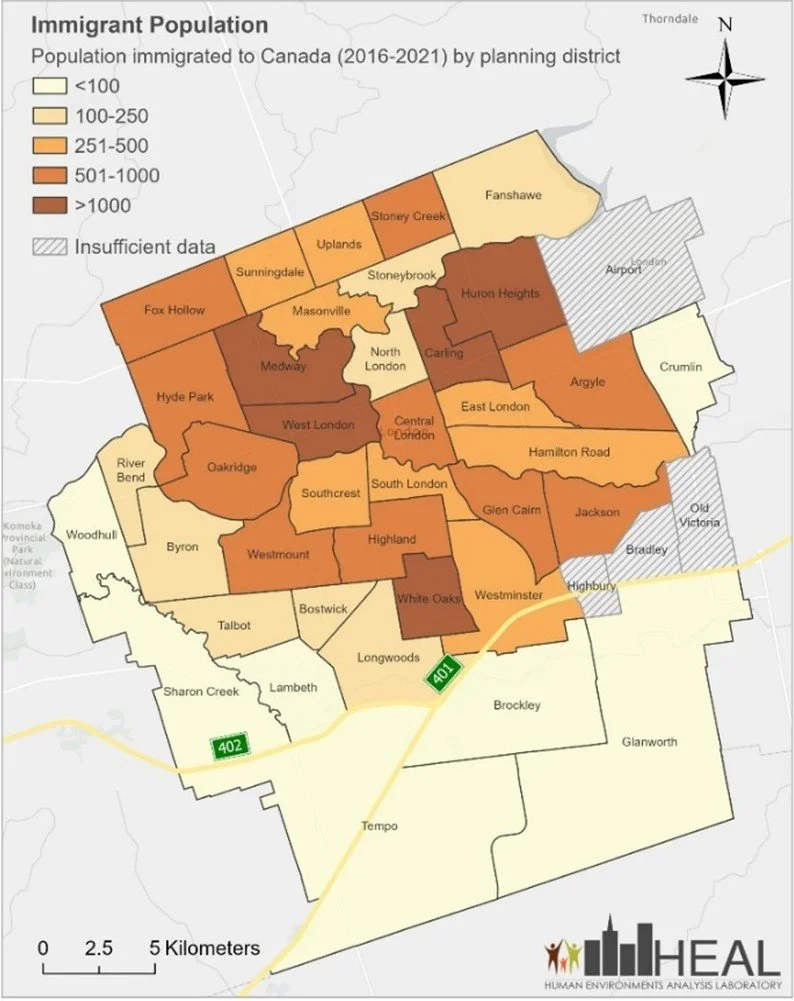
The data shows that immigrants who arrived between 2016 and 2021 are heavily concentrated in North Central London and the White Oaks district.
High Concentrations: Districts such as Medway, West London, Carling, Huron Heights, and White Oaks each welcomed more than 1,000 recent arrivals during this period.
Moderate Concentrations: Areas like Fox Hollow, Hyde Park, and Oakridge show moderate density, hosting between 501 and 1,000 recent immigrants each.
This geographic clustering suggests that these neighbourhoods are serving as the primary "landing pads" for permanent newcomers. These are the areas where families are likely to buy homes, register children for school, and access long-term community services.
2. Non-Permanent Residents: The "Student Belt"
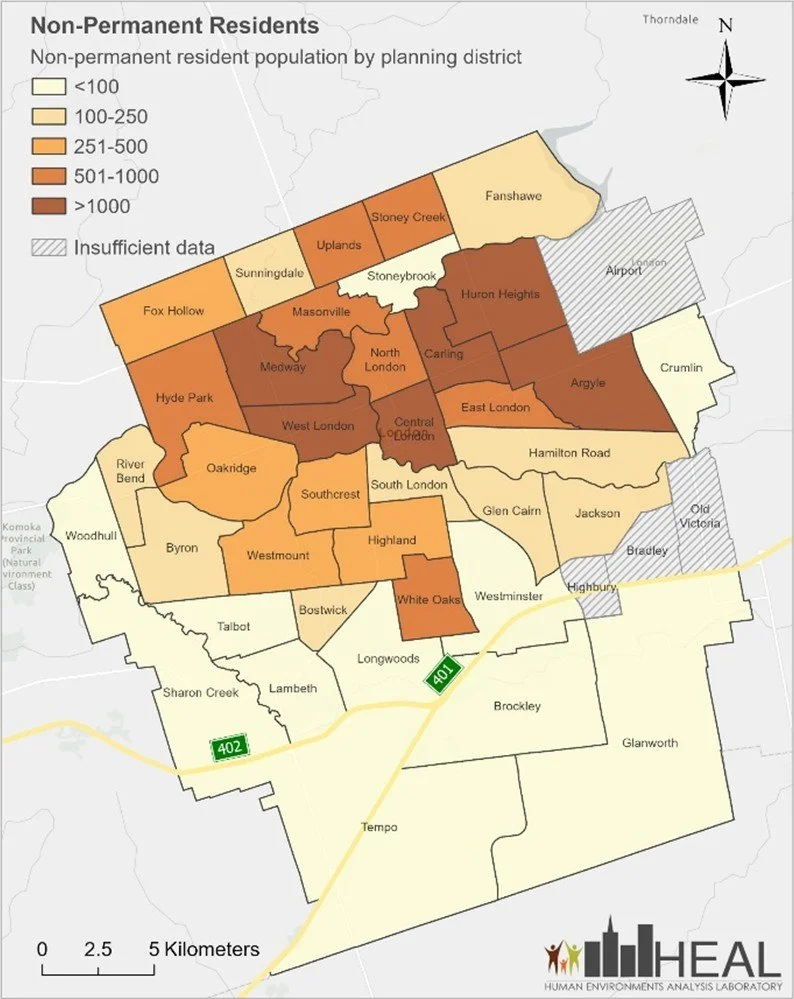
In contrast, the settlement pattern for non-permanent residents, a category that includes international students and temporary foreign workers, shows a different footprint.
Key Clusters: This population is significantly concentrated in North Central London and several Northeastern districts, specifically Medway, West London, Central London, Carling, Huron Heights, and Argyle.
The Difference: While there is overlap in areas like Medway and White Oaks, the map highlights the Northeast as a distinct hub for temporary residents, likely driven by proximity to post-secondary institutions and rental housing.
These maps provide a baseline for understanding how federal and provincial policy shifts reverberate at the neighbourhood level. Recently, the federal government announced adjustments to immigration targets, aiming to reduce the proportion of temporary residents in Canada from 7.5% to 5% by 2027. This policy shift includes a reduction in temporary resident targets, a trend already visible in provincial data, which recorded a decrease of over 37,000 non-permanent residents in Ontario during the first quarter of 2025.
Locally, this aligns with enrollment adjustments at major institutions. Fanshawe College, for example, has seen international student enrollment decrease significantly following the implementation of the federal cap.
When we overlay these trends onto the HEAL maps, the implications for specific neighbourhoods become clearer:
Impact on Rental Markets: Districts with high concentrations of non-permanent residents, such as Huron Heights and Carling, are most likely to experience changes in rental demand as the temporary population stabilizes or declines.
Service Delivery Adaptation: Service providers operating in these "temporary" clusters may see a shift in client needs, moving from high-volume settlement inquiries to more specialized support for those transitioning to permanent status.
Housing Market Dynamics
The concentration of newcomers in specific districts also correlates with broader shifts in London’s housing market. After a period of historically low availability, London's rental vacancy rate climbed to 2.9% in 2024. Furthermore, average rents have decreased year over year by approximately 6.2% as of late 2025.
However, the data indicate a bifurcated market. While vacancy rates for higher-end units have risen to 3.8%, the vacancy rate for affordable units (renting below $1,200) remains critically low at just 0.6%.
For the White Oaks and North Central districts, identified in the report as hubs for recent immigrants, this underscores a persistent challenge. Even as the market softens generally, the availability of affordable family housing in these key settlement zones remains tight. This insight is vital for the housing sector, as it works on affordable housing developments, such as the "Doorways to Dreams" project in Old East Village, which directly addresses these localized needs.
We encourage all community partners, service providers, and residents to review the full report. By understanding where our neighbours are, we can better understand how to support them.